
Centrifugal Barrel Finishing Machine
30L
$1,200.00
Skip to product information


Centrifugal Barrel Finishing Machine
$1,200.00
Pickup currently not available
Our Centrifugal Barrel Finishing Machine is a high-capacity batch polishing system designed specifically for the automated deburring, chamfering, polishing, and surface finishing of small and precision parts. The machine’s batch processing capability allows you to polish jewelry components, coins, and other parts separately in different chambers. As a result, parts will not be damaged by collisions with one another. It is also suitable for parts used in the medical, dental, aerospace, precision metal, and 3D printing industries.
Application
- Jewelry parts Polishing
- Medical device
- Dental parts
- Aerospace engine blade
- Acrylic and rubber parts
- Metal and metal alloy parts
- Small size delicate parts
Shipping & Returns
Packaging: Wooden crate
Shipping: Sea freight, air freight, etc.
Warranty: 1 years (excluding wear-and-tear parts)
Shipping Costs: Product prices do not include tax or shipping costs. All products are custom-made, and shipping rates fluctuate significantly. If you are interested in purchasing, please contact us first.
Bottlenecks & Challenges
IS YOUR WORKSHOP EXPERIENCING THESE?
Conventional vibratory finishing is too slow, and lead times are long.
Backlog of orders, customers are pressing for delivery.
Small precision parts are prone to dents and scratches.
Low yield rate, high scrap rate.
Inconsistent surface quality, significant batch-to-batch variation.
High rework rate, damaged reputation.
High equipment costs; long return on investment cycle.
Concern that the purchase won’t be cost-effective.
If you are experiencing these problems, The Centrifugal Barrel Finishing Machine is the solution designed for you.
Case Study: Centrifugal Finishing of Stainless Steel Parts
Recommended processing stages and abrasives
| Step | Objective | Equipment used | Media used | Duration | Note |
|---|---|---|---|---|---|
| Step 1 | Rough grinding, removing grease, and smoothing the surface | Centrifugal Barrel Finishing Machine | 15×15 brown aluminium oxide | 1.5 hours | Pour in an appropriate amount of grinding slurry |
| Step 2 | Fine polishing to repair coarse grinding scratches and smooth the surface | Centrifugal Barrel Finishing Machine | Resin | 40 minutes | Add an appropriate amount of brightening agent |
| Step 3 | Brightly polished surface | Centrifugal Barrel Finishing Machine | High-frequency ceramic | 30 mins | Add an appropriate amount of polishing compound |
Scroll horizontally to view more details →
Note: Polishing time and results depend on the part’s geometry, burr size, and surface finish requirements. We recommend conducting a small-batch trial first to determine the most suitable polishing method. Since polishing procedures vary by part, please contact us for details so we can provide you with a customized polishing solution.
Results after processing in Centrifugal Finishing
Remove burrs
Remove surface stains
Smooth the surface
Process parts in batches
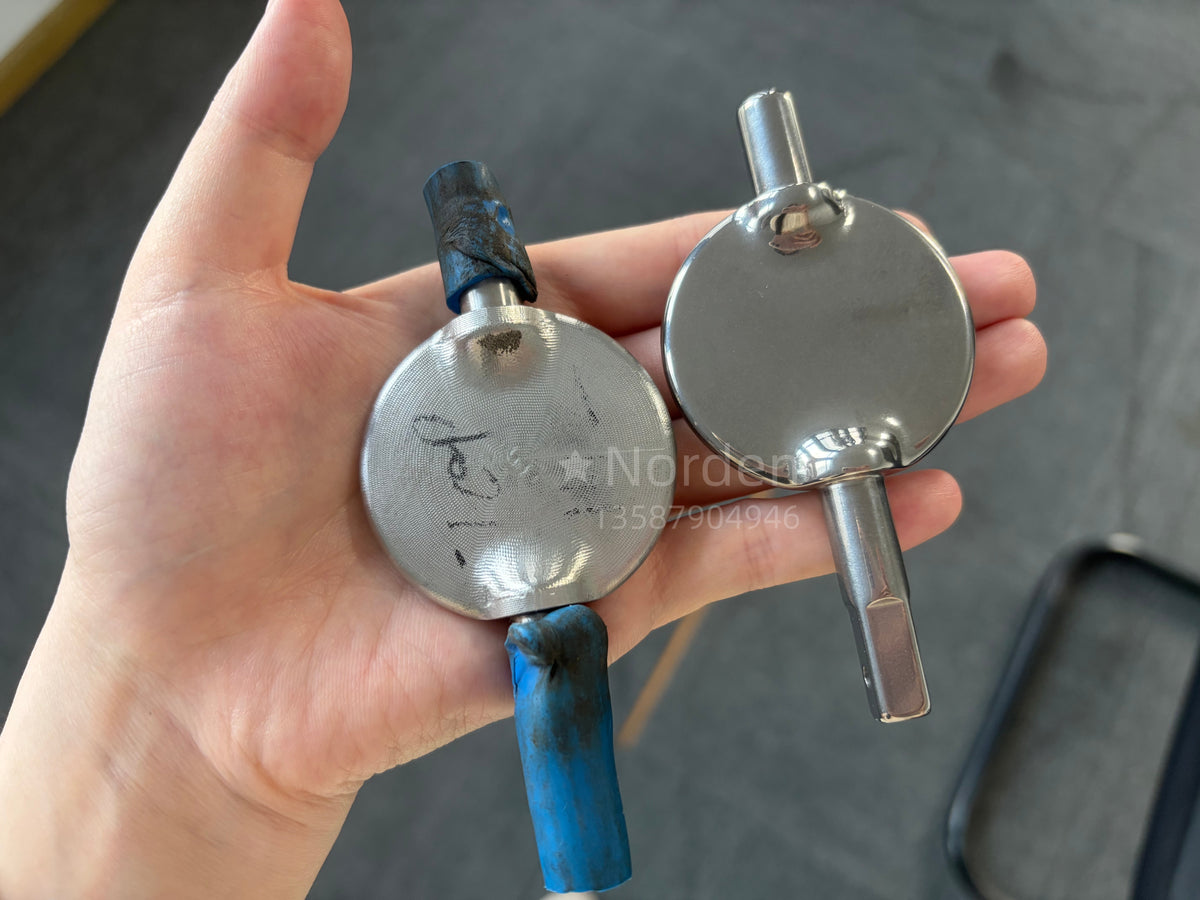
Centrifugal Barrel Finishing Machine Solutions
Process: Deburring, edge rounding, polishing, surface finishing
The operating principle of a centrifugal barrel polishing machine is similar to that of a Ferris wheel. Typically, four barrels are mounted around the perimeter of a central turntable. When the polishing machine is started, the turntable completes one full rotation, causing each barrel to complete one full rotation as well. As the central turntable rotates, it generates centrifugal force on the polishing media and workpieces inside each barrel. This centrifugal force causes the workpieces and media to rub against each other, thereby achieving the desired surface finish.
Parts We Can Process:
→ Jewelry & Watch Parts
→ Medical Components
→ Dental Components
→ Aerospace Components
→ 3D Printed Parts
→ CNC Machined Parts
→ Small Precision Parts
→ Metal Hardware
→ Stainless Steel Components
→ Aluminum Components
What Can a Centrifugal Barrel Finishing Machine Do?
Deburring
Removes sharp edges and machining burrs from metal parts.
Chamfer
Creates smoother, more uniform edges and rounded corners.
Surface Smoothing
Improves rough or uneven surface conditions through controlled abrasive action.
Cleaning
Removes residues, light oxidation layers, and contaminants, depending on the abrasives and grinding aids used.
Polishing
Enhances surface gloss and smoothness using appropriate fine abrasives and grinding aids.

Key Features

Batch Consistency
Eliminates operator-dependent inconsistencies. Digital control delivers surface uniformity across every batch.
- Each cycle follows the same programmed parameters — speed, time, pressure — removing human error.
- Identical quality batch after batch, ensuring predictable production schedules and customer satisfaction.
Low-Damage Precision Processing
- Equipped with four removable drums, each with its own independent working chamber.
- Designed for fragile parts — aerospace blades, medical implants, and jewelry components.
- Controlled centrifugal force minimizes part-to-part impact while maximizing media contact.
Removable barrel
- Suitable for multi-batch different parts finishing
- Suitable for pearl and jewelry parts
- Suitable for dental and medical parts
30L-360L Capacity Range
- Handles parts from 5mm jewelry findings to 200mm gears. Final machine selection depends on part dimensions, geometry, batch size and required finish.
- Four fixed barrels per machine ensure balanced loading. Turntable design allows easy capacity adjustments.
- From 30L to 360L — fit any workshop layout, from small job shops to high-volume lines, maximizing ROI per square meter.
Optional accessories

Automatic Separation
Our centrifugal barrel polisher can be equipped with an automatic sorting screen that automatically separates the polishing media from the parts, eliminating the need for you to manually separate them. This highly automated system saves time and labor; if your budget allows, we recommend this option.

Customizable number of compartments
This machine features batch processing capabilities. The large chamber can be divided into numerous smaller compartments, allowing you to polish jewelry parts, coins, and other components separately in different compartments. It is also suitable for polishing high-value surgical components, turbine blades, and 3D-printed parts.
Independent compartments help reduce direct part-to-part contact and can help protect delicate components during finishing.

Variable-Frequency Control
This machine features variable-frequency speed control and forward and backward tumbling. Additionally, a fully English-language control panel can be customized to make operation clearer and more convenient.
Technical Specifications of Our Centrifugal Barrel Finishing Machine
Technical specifications
Centrifugal barrel finishing machine parameters , Total Machine Capacity: 30L–360L
Scroll horizontally to view all parameters
| Model | Capacity (L) | L*W*H (mm) | Drum Speed (RPM) | Power (kW) | Barrel Net Size (mm) | Weight (kg) |
|---|---|---|---|---|---|---|
| 30L | 4*7.5 | 950*900*1200 | 0-180 | 1.5 | 90*180*190*273 | 350 |
| 36L | 4*9 | 1000*950*1300 | 0-160 | 1.5 | 100*200*215*405 | 400 |
| 40L | 4*10 | 1050*1000*1350 | 0-160 | 2.2+0.37 | 90*180*190*273 | 450 |
| 60L | 4*15 | 1250*1200*1650 | 0-150 | 4.0+0.37 | 100*200*215*405 | 800 |
| 80L | 4*20 | 1400*1300*1700 | 0-140 | 5.5+0.75 | 120*240*245*430 | 1000 |
| 120L | 4*30 | 1500*1500*1800 | 0-130 | 5.5+0.75 | 130*260*250*550 | 1300 |
| 200L | 4*50 | 1800*1750*1900 | 0-120 | 7.5+1.5 | 180*360*345*470 | 1600 |
| 360L | 4*90 | 2200*1900*2100 | 0-120 | 11+2.2 | 210*420*400*580 | 2200 |
Centrifugal vs. Vibratory Finishing
| Feature | Centrifugal Finishing | Vibratory Finishing |
|---|---|---|
| Finishing intensity | High-energy process | Moderate, controlled finishing |
| Processing speed | Faster in suitable applications | Suitable for standard batch cycles |
| Small precision parts | Highly suitable | Suitable depending on part geometry |
| Large batch quantities | Depends on machine capacity | Well suited to large batch processing |
| Part separation | Separate barrels available | Usually processed together in one bowl or tub |
| Deburring | Excellent for suitable parts | Excellent for suitable parts |
| Typical use | Small, precision and delicate components | General-purpose batch finishing |
| Machine types | Centrifugal barrel / disc finishers | Vibratory bowl / tub finishers |
Which Finishing Machine Should You Choose?
Choose a centrifugal finishing machine when your application requires high-energy finishing, shorter processing cycles, controlled processing of small parts or separation between different workpieces.
Choose a vibratory finishing machine when you need a versatile solution for general-purpose batch deburring, polishing, cleaning and surface finishing of larger quantities of parts.
The best process depends on the actual workpiece and required finishing result. Factors such as material, part geometry, surface condition, media, compound, processing time and batch quantity should all be considered.
Need Help?
Send us your part photos, dimensions, material and required finishing result. Our technical team can evaluate your application and recommend a suitable finishing machine, media and process configuration.
How sample testing working

Let the Results Speak Before You Buy
✓ Eliminate guessing about machine fit
✓ Get optimal parameters for free
✓ Zero risk - you only pay for shipping
Why choose us
Delivery Services
We collaborate with reliable logistics partners to provide efficient logistics and delivery services.
After Sales Service
We offer a one-year warranty, online installation guidance, and online surface treatment solutions.
Quality Control
With over 20 years of expertise in polishing machinery, we guarantee quality and reliability.
Frequently asked questions
What is a centrifugal barrel finishing machine?
Centrifugal barrel finishing machines operates on the Ferris wheel principle. Usually, four barrels are mounted at the periphery of the center turret. When the tumbling machine starts, one full turn of the turret wheel results in one complete rotation of each barrel. As the central turret spins, it generates a centrifugal force on the tumbling media and workpieces inside each barrel. The centrifugal force causes the workpieces and media to rub against each other, resulting in the desired finish.
What types of parts are best suited for Centrifugal barrel finishing machines?
Ideal for small to medium-sized parts that require high precision and repeatable surface quality, especially components made from:
Stainless steel, aluminum, titanium, brass, and copper
Medical implants and instruments
Aerospace components and fasteners
Jewelry and watch parts
3D-printed or CNC-machined prototypes
Delicate parts with fine features or tight tolerances are ideal for centrifugal finishing. This process combines high energy with controlled, low part-on-part contact, which helps protect critical surfaces while still achieving fast deburring and a refined finish.
What are the main advantages of using a centrifugal barrel finishing system over other finishing methods?
High-energy action shortens cycles and boosts throughput.
Polishing – improving surface brightness and smoothness. Can achieve a mirror finish, the final surface finish depends on the abrasive media and polishing compound used, as well as the material and geometry of the workpiece and the process parameters.
Adjustable speed, media, and compounds for varied targets. Compact design fits tight spaces.
What types of polishing operations does a centrifugal barrel finishing?
- Deburring – removing sharp edges and burrs
- Descaling – stripping heat-treat scale, oxidation, or rust
- Edge radiusing – rounding corners and edges to a controlled radius
- Surface smoothing – producing a uniform satin or matte finish
- Polishing – achieving bright finishes up to a mirror-like shine
The final result depends on the media shape/material, compound selection, and process parameters used in each barrel.
Can the machine process parts with complex geometries?
It is also ideal for parts with holes and recesses. The parts are also less likely to impact each other, making it suitable for polishing high-value surgical components, turbine blades, and 3D printed parts.
How often should the media be replaced?
The service life of the media depends on the frequency of use and the materials being processed. Ceramic media typically last 500–1,000 hours. We recommend inspecting metal parts for wear every 200 hours. We offer a variety of media, such as ceramic, resin, and stainless steel, and can recommend the best option based on your specific application.
Who Is a Centrifugal Barrel Finishing Machine For?
A centrifugal barrel finishing machine is particularly suitable for manufacturers that need:
High-energy mass finishing
Fast deburring of suitable small parts
Controlled finishing of precision components
Separate processing of different batches
Reduced direct part-to-part contact
Repeatable batch processing
Finishing of complex-shaped small components
Jewelry and watch component finishing
Medical and dental component finishing
3D-printed metal part finishing
When Is Another Finishing Process More Suitable?
For oversized or overweight workpieces, those with unusual shapes, applications requiring special surface treatments, or workpieces where a high-gloss finish is not essential, different finishing techniques may be required. We recommend carrying out sample testing before purchasing equipment.
Need the Right Machine for Your Parts?
Tell us what you are finishing. We'll help you choose the machine.
Send us:
- Part photos
- Part material
- Part dimensions
- Burr condition
- Desired surface finish
- Current machine
- Required production volume
Related Products

Centrifugal Disc Finisher
It produces a high-quality, smooth surface on even the most complex and thin workpieces. Therefore, it can be used for extremely intricate and thin components, such as earrings, pendants, rings, and other jewelry.

Centrifugal Disk Finisher
Suitable for stampings, castings or machined parts finishing, Coin blank polishing, Zamak belt buckle polishing , Plastic eyeglass frame polishing.

Vibratory polishing machine
For batch metal deburring, polishing, cleaning and surface finishing. Such as aluminum, brass, copper, stainless steel, and iron workpieces, etc.

Ceramic Tumbling Media
This media is available for everything from light to heavy cutting and provides a large amount of abrasive material for rapid deburring.
Learn More


